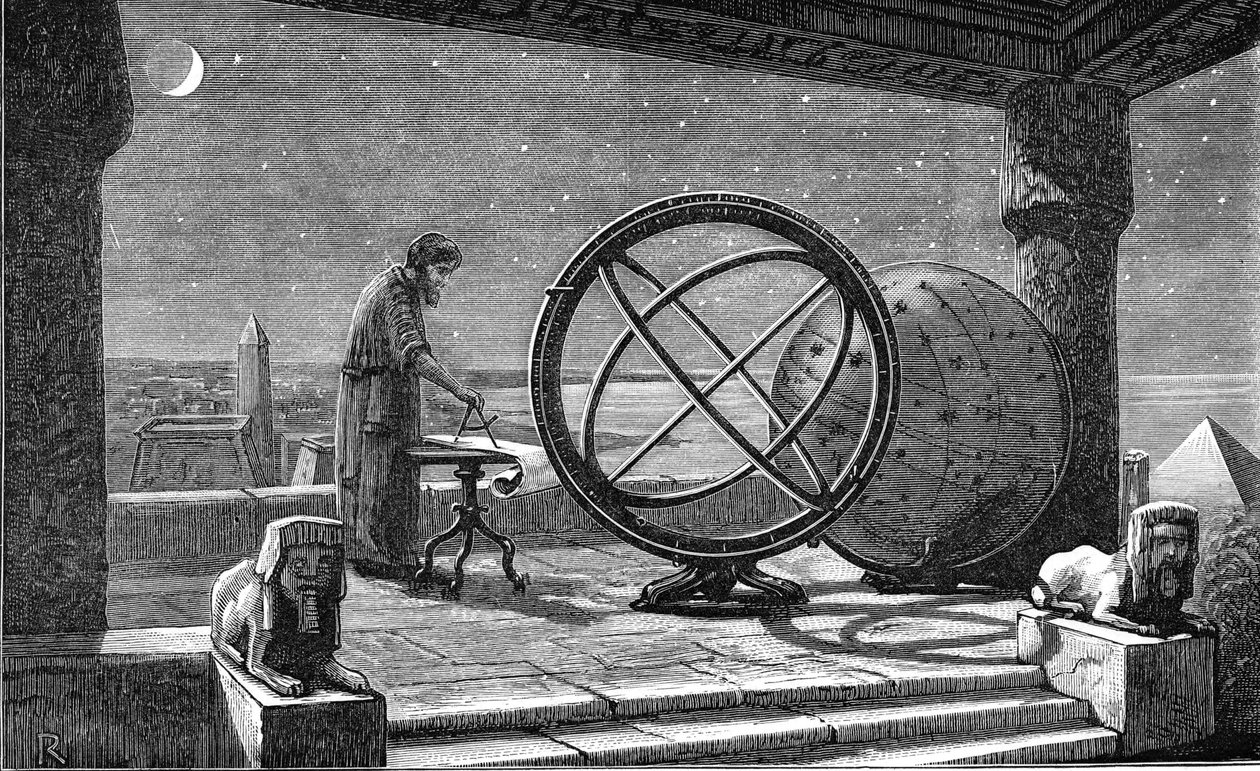
c. 190 BCE
context Born in Nicaea (Bithynia)
Ancient biographical information is fragmentary; Nicaea is generally given as his birthplace.
Greek astronomer, geographer and mathematician (2nd century BCE). His hallmark: turning observation into models—and models into usable instruments.
This page blends a detailed biography with an ‘encyclopedia’ of contributions attributed to Hipparchus, focusing on documented elements and robust orders of magnitude.
Figures are orders of magnitude from historical syntheses; see Sources & references.
We know little about his personal life; his methodological footprint is clearer: compare, correct, quantify, and document.
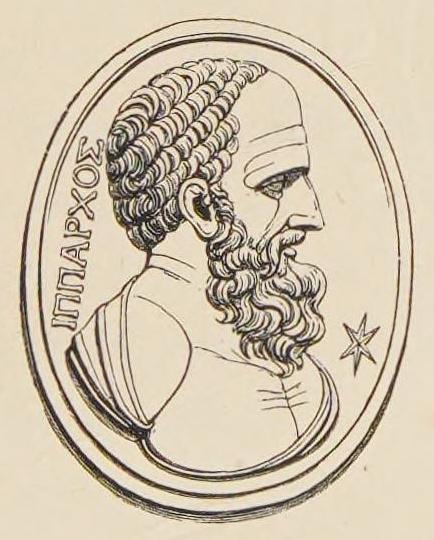
Ancient astronomy becomes operational when observation is organized: reference points, repeated measures, and systematic comparisons.
Ancient biographical information is fragmentary; Nicaea is generally given as his birthplace.
Often dated as active roughly between 162 and 127 BCE in later reconstructions; the key is sustained observational work.
Rhodes is frequently cited as the place where he conducted most of his work.
The end of his life is as uncertain as its beginning; the legacy comes from methods and later citations.
Note: biographical details are sparse; we prioritize methodological and well-attested contributions.
Items are grouped by domain, with explicit caution whenever attribution is indirect (late sources, fragmented transmission).
Attributed to Hipparchus: comparing stellar longitudes across epochs suggested a systematic drift. Ancient sources report an estimate of at least ~1° per century (order of magnitude).
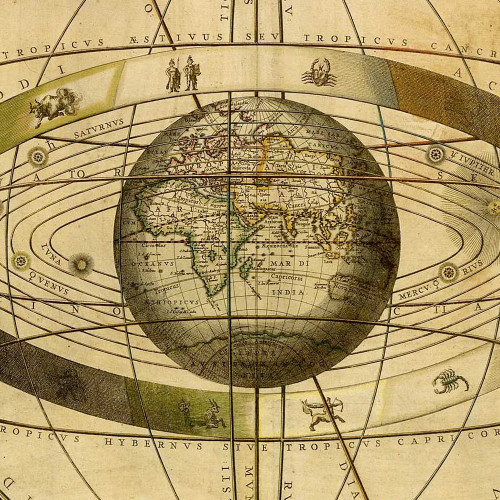
Concept: the equinox points slowly shift along the ecliptic.
Method: comparison across epochs (systematic residual).
Impact: forces a distinction between tropical and sidereal references.
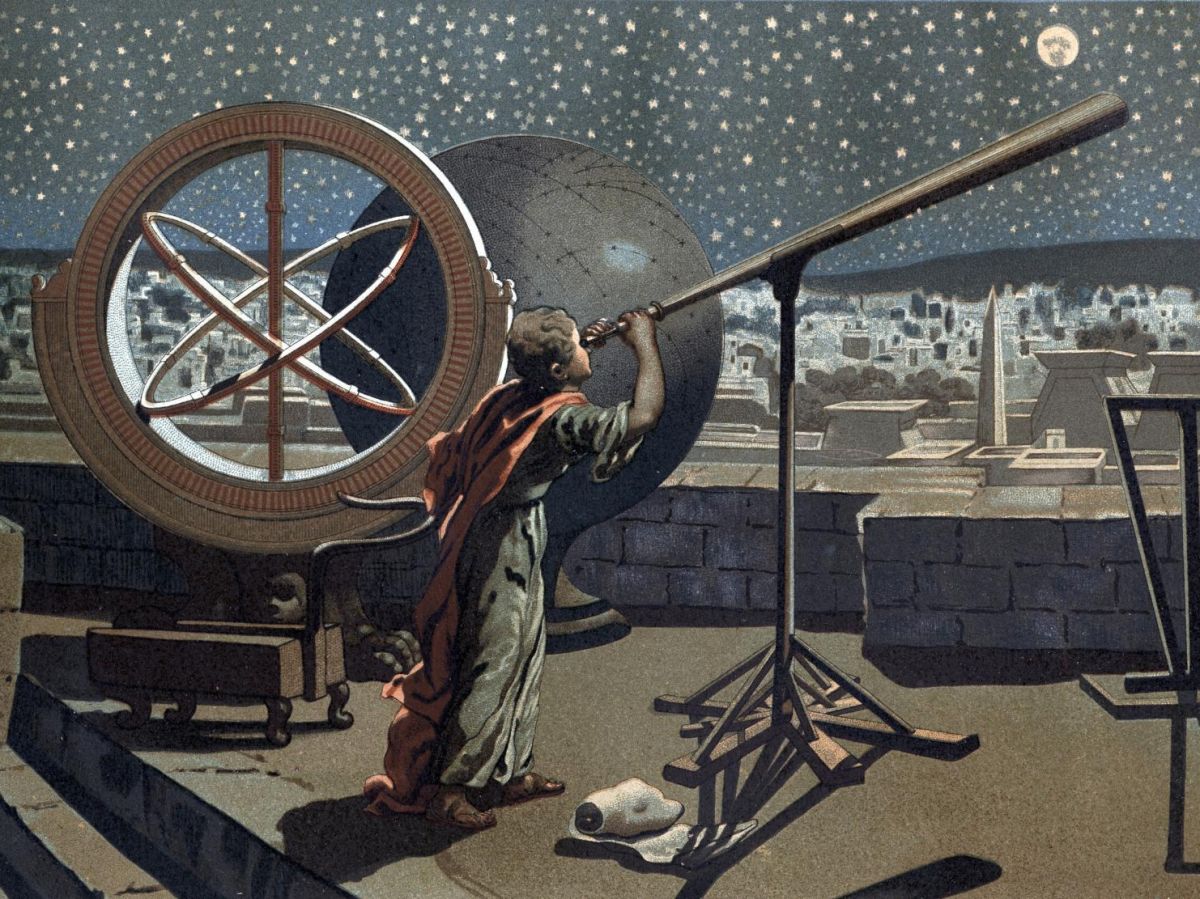
Precession emerges as a systematic residual across epochs.
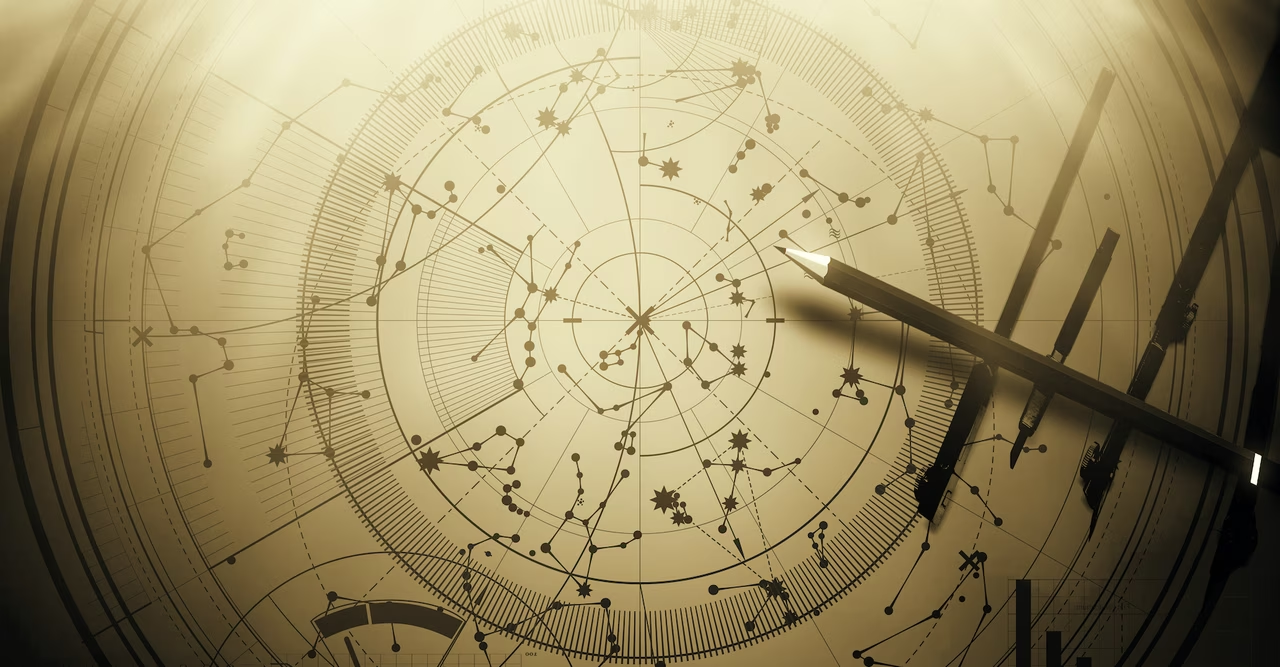
From narrative constellations to indexed positions and magnitudes.
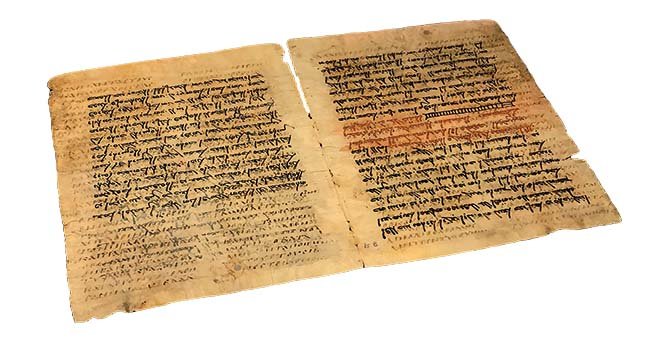
Chord tables operationalize circle geometry for astronomy.
Hipparcos and Gaia extend astrometry from hundreds to billions of sources.
The key intellectual move is to treat discrepancies as signal rather than noise: if the same offset persists across independent stars and epochs, it points to a systematic drift in the reference frame.
Historical accounts commonly report an estimate of at least ~1° per century. Modern values differ, but the conceptual leap remains decisive.
Tables convert geometry into procedure. That operational mindset is a hidden source of performance: fewer ad hoc computations, more repeatability.
In finance, the equivalent is a robust model + documented assumptions + reusable templates.
Measurement is not a moment: it is a system.
What makes Hipparchus ‘modern’ is not only what he found, but how: measure drift, estimate error, build a table, reuse the table.
A reference frame is a contract. If the frame drifts, the contract must be updated.
A repeated discrepancy across independent items points to structure, not noise.
Tables enable scale: many computations, consistent outputs.
Knowledge lasts when it is documented and critique-ready.
His name became a symbol: moving from a ‘narrated’ sky to a ‘measured’ sky. Modern astrometry missions extend this gesture at new scales.
ESA’s Hipparcos delivered a high-precision catalogue of 118,218 stars—an industrial-scale reference frame.
ESA Hipparcos ↗Launched on 19 December 2013, Gaia moved astrometry into the billion-source era; EDR3 reports detailed information for more than 1.8 billion sources.
Brand note: ‘Hipparchus’ embodies a commitment to reference-grade rigor: define a frame, measure carefully, document assumptions, and keep the system auditable.
Most commonly for the discovery (or clear formulation) of precession of the equinoxes and for advancing mathematical astronomy.
The link is historical and debated; many accounts connect the scale to antiquity and Hipparchus, but direct surviving proof is limited.
Because modern astrometry embodies the same idea: build reference frames from precise measurements—scaled from hundreds to billions of sources.
Primary and institutional sources used for factual anchors and figures.
General biography and overview of contributions.
Numbers and historical estimates (year accuracy, precession estimate, ~850 stars).
Chord table and trigonometry foundations.
Hipparcos Catalogue: 118,218 stars.
Launch date and mission milestones.
EDR3: detailed information on more than 1.8 billion sources.
Astronomy teaches how to steer trajectories under uncertainty. Wealth strategy does, too. Hipparchus is our working metaphor: rigor, method, evidence, execution.
Describe your need in a few lines. We will revert with clear framing, a method, and next steps.